?The long-standing diplomatic romance between Nigeria and Brazil has officially transitioned from boardroom handshakes into actual cargo, marking a major turning point for the economic fortunes of both nations.
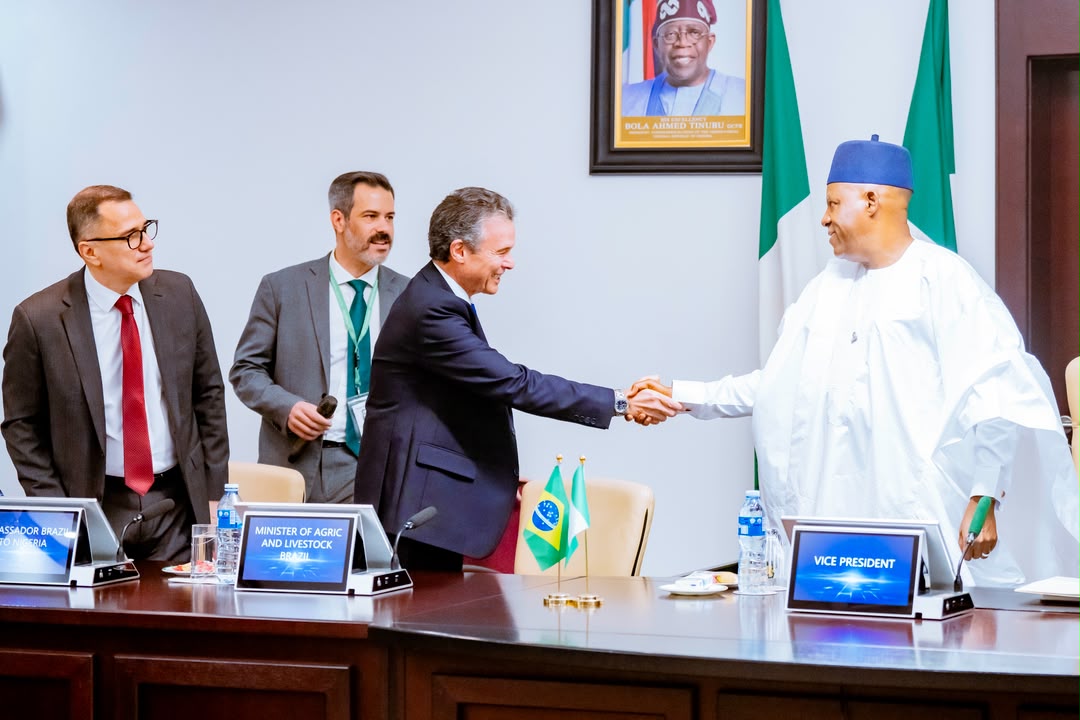
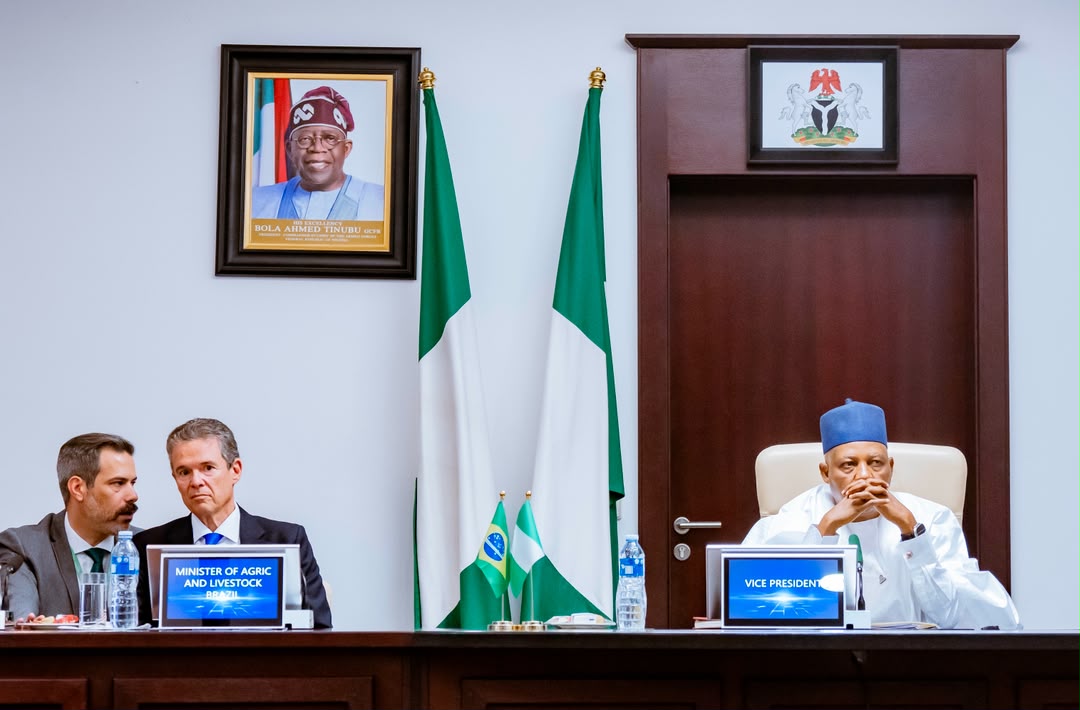
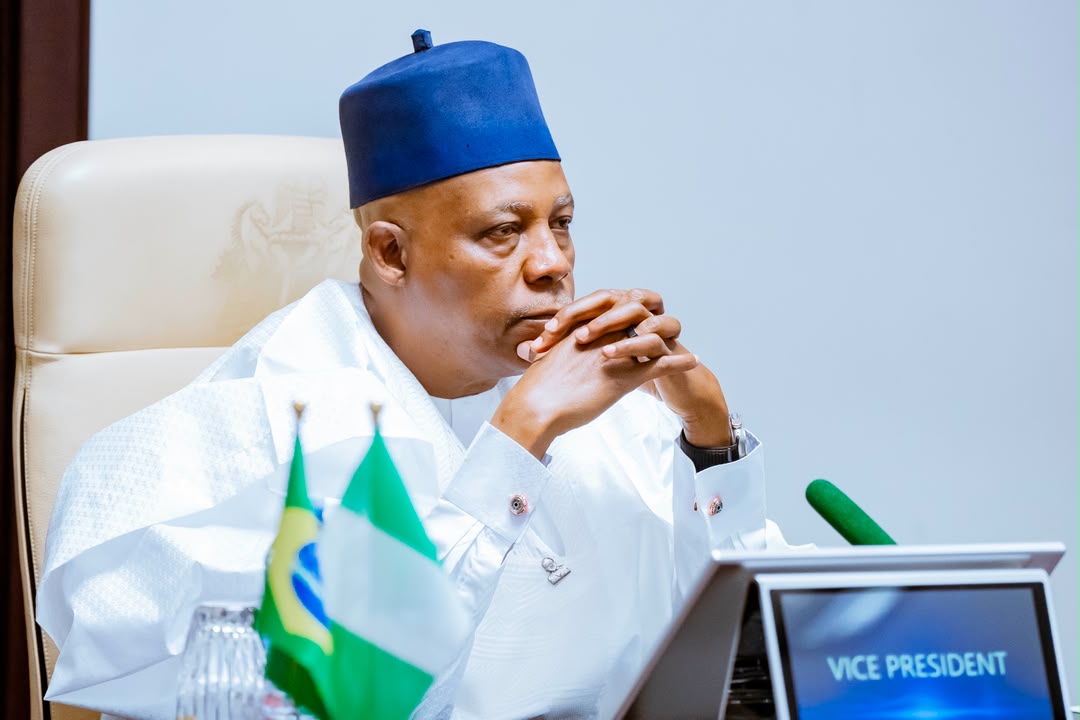
Vice President Kashim Shettima declared on Monday that the bilateral agricultural partnership has successfully pivoted from dialogue to delivery, effectively clearing the runway for private sector operators to begin moving commodities across the Atlantic.
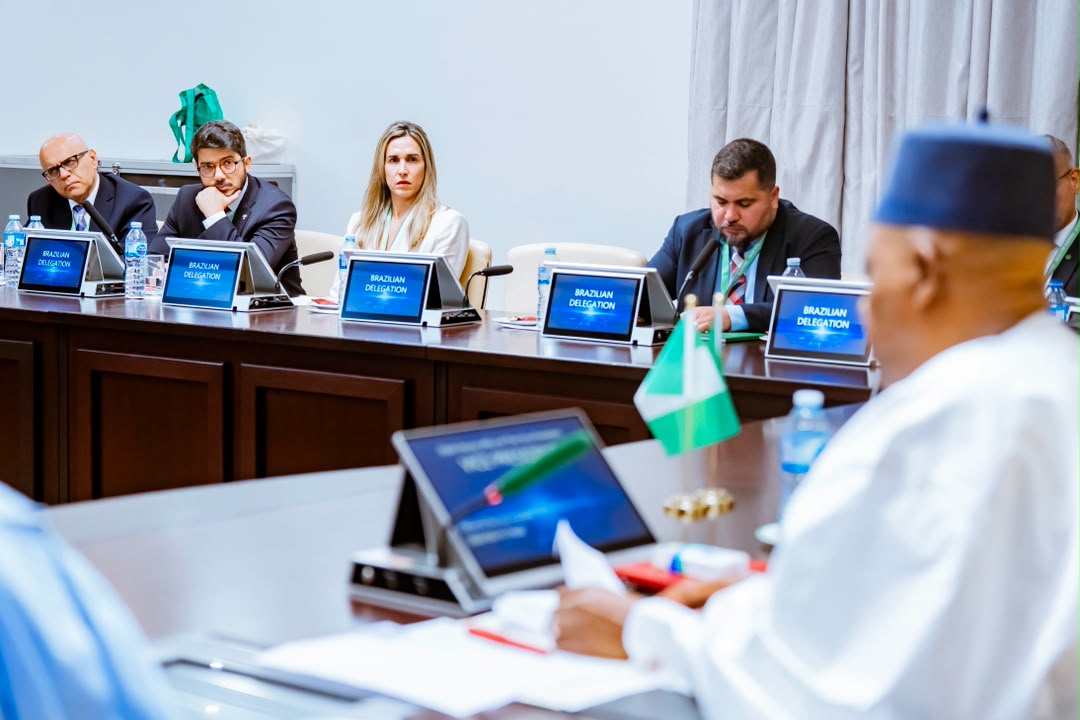
Speaking at a high-level milestone meeting at the Presidential Villa in Abuja, Shettima emphasized that the true measure of any global alliance lies not in the ink dried on treaties, but in tangible shipments that put money into the pockets of everyday citizens.
?This operational shift breathes fresh life into the Nigeria-Brazil Strategic Dialogue Mechanism, a framework accelerated after President Bola Ahmed Tinubu’s recent state visit to Brazil.
Recognizing that past trade volumes fell embarrassingly short of what both economic powerhouses could achieve, President Tinubu and Brazilian President Luiz Inácio Lula da Silva had ordered an aggressive strategy to unlock bottlenecked markets.
Today, that directive is yielding concrete results through newly active technical groups collaborating on everything from dairy genetics and soybean productivity to advanced agro-climatic zoning.
?The immediate fruits of this diplomatic labor offer massive wins for Nigerian exporters. Brazilian Minister of Agriculture and Livestock, André Carlos Alves de Paula Filho, revealed during the Abuja summit that Brazil is finalized on preparing the phytosanitary certificates required to officially open its borders to Nigerian hibiscus, sesame, and shea butter.
Once cleared, Brazil has pledged to directly connect Nigerian suppliers with South American buyers, instantly carving out a lucrative new revenue stream for Nigerian agriculture.
It is a development that drew strong praise from Jigawa State Governor Malam Umar Namadi, who noted that his state—already a powerhouse contributing three-quarters of Nigeria’s non-oil exports—stands ready to aggressively supply this newly opened pipeline.
?As Brazil tightens its institutional ties with Nigeria by embedding an Agricultural Attaché in Abuja and deploying its famed agricultural research corporation, EMBRAPA, Nigeria's Minister of Agriculture and Food Security, Senator Abubakar Kyari, reiterated that the nation views Brazil as the ultimate blueprint for modern agricultural transformation.
Vice President Shettima concluded by challenging local farmers, cooperatives, and processors to urgently scale up to meet international standards.
The goal is no longer just to trade, but to ensure that value is added right at home, translating these freshly cleared trade routes into sustainable jobs, rising household incomes, and robust economic growth spanning from the fields of Jigawa to the markets of São Paulo.