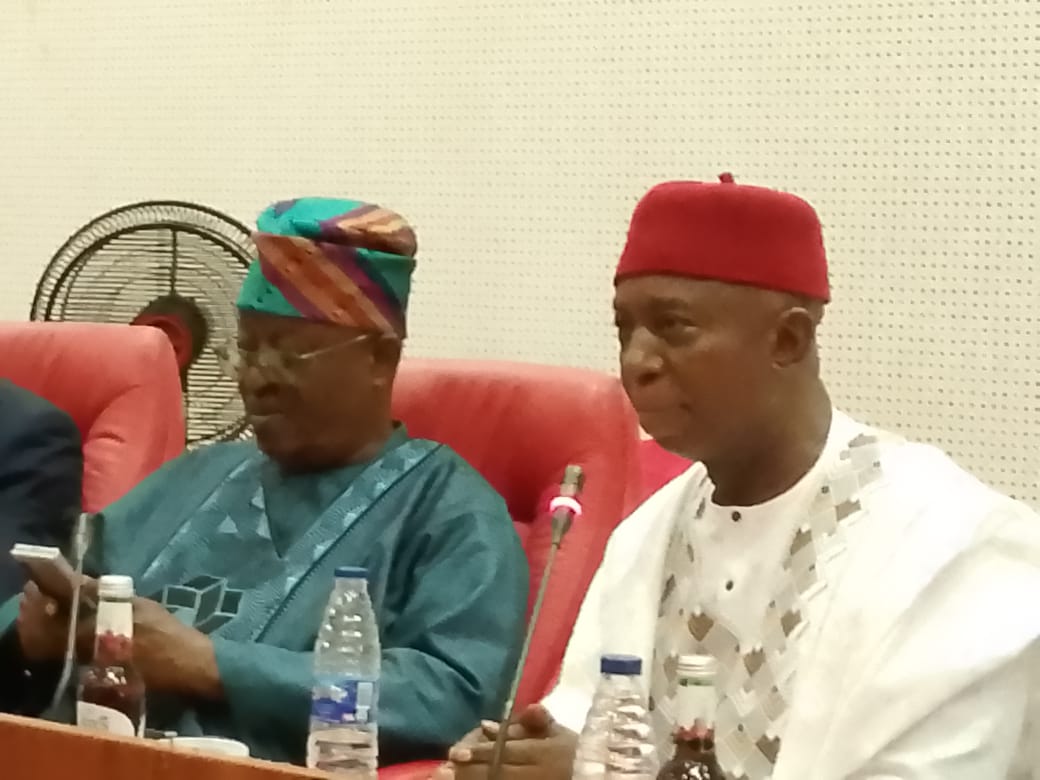
Senator Benson Sunday Agadaga, representing Bayelsa East Senatorial District, has explained the rationale behind his proposed amendment to the Border Communities Development Agency Act, 2006,
Senator Agadaga described it as a necessary step toward correcting decades of exclusion and ensuring equitable development for neglected coastal and border communities across Nigeria.
He revealed this after the Senate passed the bill for second reading today Wednesday during the plenary session,

Senator Agadaga said the legislation seeks to expand the list of recognized border communities under the Border Communities Development Agency and address administrative discrepancies affecting some communities along the Bayelsa-Rivers State boundary.
According to the lawmaker, the bill had been under consideration since last year and he expressed gratitude that it had finally reached a significant stage in the legislative process.
“This is a bill that is very dear to me because it concerns communities that have been overlooked for too long. I thank God that it has finally seen the light of day,” he said.
The senator explained that border communities are the first points of contact for visitors entering Nigeria through land and waterways and therefore deserve special attention from government.
“When people come into Nigeria from neighboring countries or through our coastal routes, the first Nigerians they encounter are those living in border communities. These communities represent the image of our country and should not be left without basic infrastructure and social amenities,” he stated.
He noted that while more than 3,000 communities are currently recognized under the Border Communities Development Agency framework, many deserving coastal settlements in Bayelsa and other states remain excluded from the benefits of the programme.
Senator Agadaga specifically highlighted communities in Brass, Nembe and Southern Ijaw Local Government Areas, describing them as strategic coastal settlements that play critical roles in Nigeria’s economy and maritime activities.
“Bayelsa State has one of the longest coastlines in Nigeria. We are at the heart of the country’s oil and gas production. The economy of the nation depends significantly on resources produced from our region. It is only fair that our communities benefit from the same federal interventions available to other border communities across the country,” he said.
He further explained that some communities currently listed under Nembe Local Government Area of Bayelsa State are geographically located within Rivers State and should be properly reassigned to their correct administrative jurisdictions.
According to him, correcting these anomalies will ensure that genuine border communities in Bayelsa receive their rightful share of development benefits under the Act.
The senator stressed that the primary objective of the bill is development rather than security, although improved living conditions would inevitably contribute to peace and stability.
“This bill is not fundamentally about insecurity. It is about attracting federal government attention to neglected communities. If people have access to potable water, electricity, schools, healthcare and economic opportunities, they become more productive and contribute meaningfully to national development,” he said.
He argued that improved infrastructure and social services would reduce poverty and unemployment, factors often linked to criminal activities and insecurity.
“When communities are developed and people can provide for their families, the temptation to engage in kidnapping or other criminal activities is greatly reduced. Development itself becomes a tool for promoting security,” he added.
Senator Agadaga expressed confidence that the bill would successfully complete the legislative process and eventually receive presidential assent, paving the way for more inclusive development in coastal and border communities across Nigeria.
He called on his colleagues in the National Assembly to support the legislation, noting that it seeks to provide long-overdue recognition, federal presence and development opportunities to communities that have remained on the margins for nearly two decades.
“This amendment is about fairness, inclusion and national development. It is about ensuring that no deserving border community is left behind,” he said.