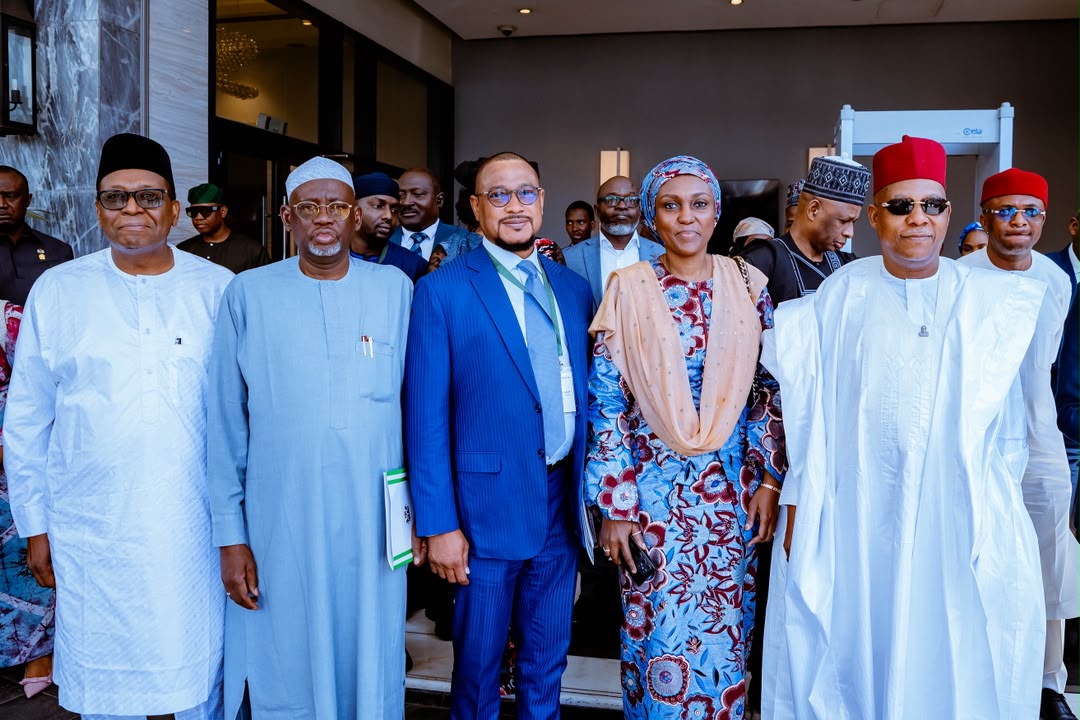
The Federal Government and state governors have resolved to strengthen grassroots implementation of Nigeria's nutrition policies, drawing strategic lessons from Ethiopia’s counter-malnutrition initiatives to accelerate child health and human capital development.
?Speaking at the Nigeria–Ethiopia Nutrition Leadership Exchange in Addis Ababa where the Nigerian delegation was led by Vice President Kashim Shettima, key federal ministers and state governors emphasized the necessity of moving interventions from high-level policy frameworks directly into communities and households nationwide.



?The high-level discussions centered on Nigeria's "Nutrition 774" initiative, designed to establish coordinated interventions across healthcare, education, agriculture, water supply, and social protection across all 774 local government areas.
?State executives highlighted both subnational challenges and progress:
?Osun State: Governor Ademola Adeleke stressed the urgency of prioritizing pregnant women and children under five, noting that while initial progress has been achieved, inter-country exchanges like the Ethiopian summit provide critical insights for scaling up local impact.
?Abia State: Governor Alex Otti affirmed that tackling malnutrition requires a multi-sectoral approach encompassing education, climate action, and health. He noted Abia’s commitment to dedicating nearly 20 percent of its annual budget to education, alongside recruiting over 9,000 teachers and developing smart schools to support long-term child development.
?Zamfara State: Governor Dauda Lawal noted that ongoing security challenges have impacted local agricultural output and aggravated nutrition issues. However, he reaffirmed the state's resolve to align with federal frameworks and adapt programs to safeguard vulnerable populations.
?Jigawa State: Governor Umar Namadi pointed to Ethiopia's Seqota Declaration as a blueprint for driving interventions down to the ward and household levels. He highlighted Jigawa's homegrown community initiatives, including the "Tom Brown" nutrition scheme, which has trained 600 women to produce nutrient-rich food locally.
?Members of the federal cabinet also outlined strategic priorities across their respective domains:
?Health and Social Welfare: Coordinating Minister Prof. Muhammad Ali Pate stated that Nigeria and Ethiopia will formulate a joint roadmap from the exchange, expressing optimism that sustained multi-sectoral action over the next four to five years will yield dramatic improvements in child health outcomes.
?Education: Minister Dr. Maruf Tunji Alausa emphasized the critical importance of the first 2,000 days of a child's life—from pregnancy through early childhood—warning that failing to intervene during this window severely hinders long-term development.
?Water Resources and Sanitation: Minister Prof. Joseph Utsev underscored that clean water, adequate sanitation, and irrigation for food production remain foundational to sustaining a healthy population and driving nutritional gains.
?The exchange concluded with a unified commitment from both federal and state leaders to accelerate the rollout of the Nutrition 774 strategy directly to grassroots communities across Nigeria.