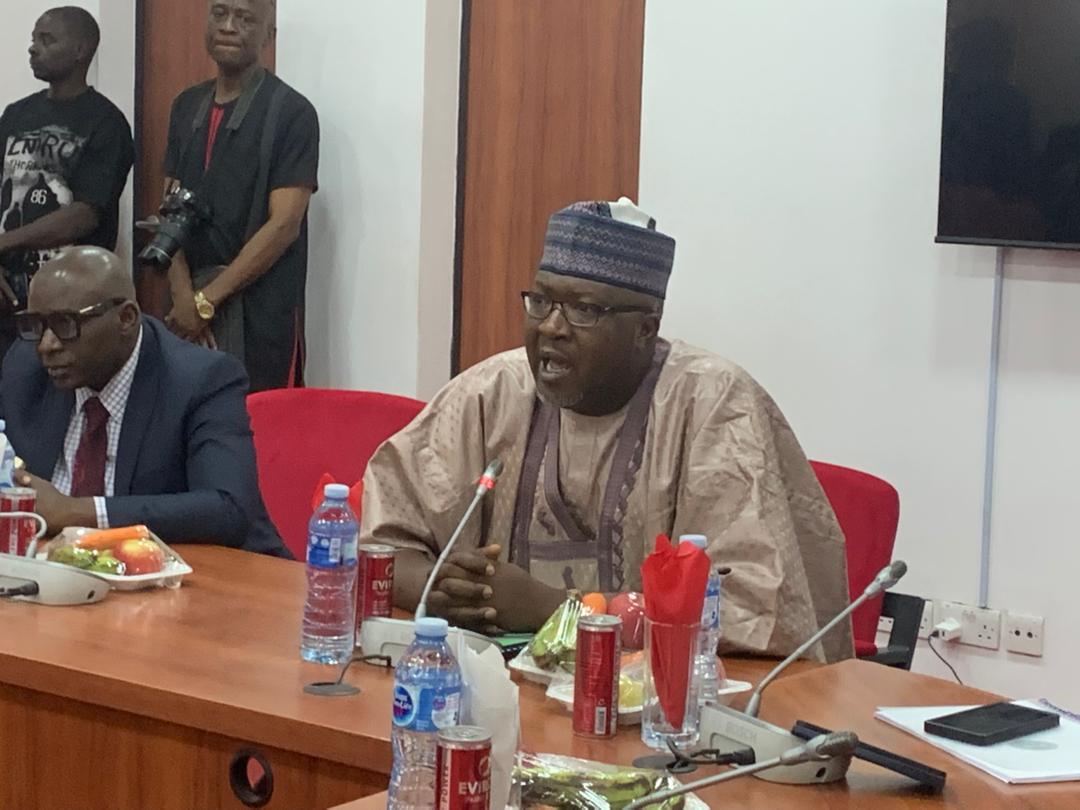
The Senate Committee on Finance has moved to recommend the removal of the Registrar-General of the Corporate Affairs Commission (CAC), Mr. Hussein Ishaq Magaji (SAN), over what lawmakers described as persistent disregard for legislative oversight and troubling inconsistencies in the agency’s revenue records.
The committee had resolved to write to President Bola Tinubu, seeking Magaji’s removal after accusing him of repeatedly ignoring invitations and delegating junior officers to represent him before the Senate.
“You have been reluctant in responding to our correspondences. Whenever we invite you, you send a junior officer to meet with the Senate of the Federal Republic of Nigeria,” the Committee Chairman said, stressing that the Constitution empowers the National Assembly to oversee all revenue-generating agencies.
Lawmakers noted that the Registrar-General only appeared before the committee shortly after it threatened to escalate the matter to the full Senate — a move they said suggested deliberate disregard.
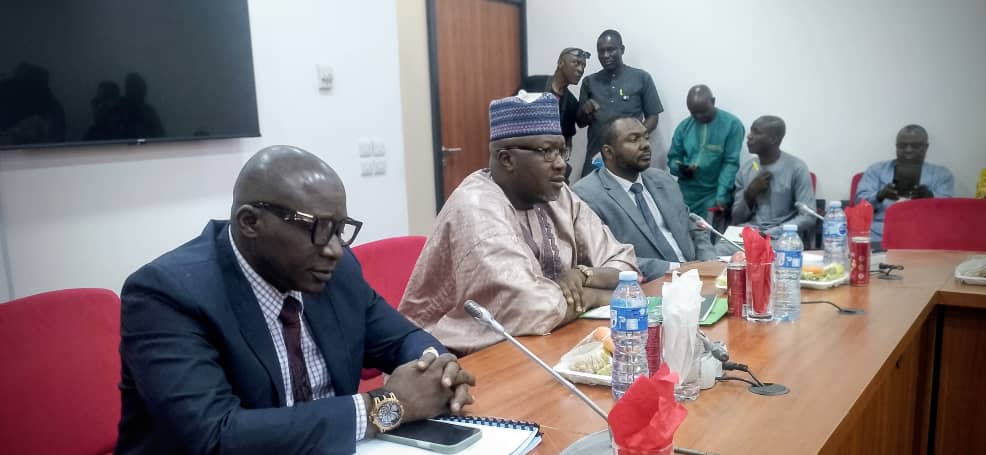

“If after our pronouncement you appeared in less than 20 minutes, then maybe you did it intentionally,” the Chairman added.
Although Magaji tendered an apology, attributing his absence to miscommunication and late receipt of the invitation, senators warned that executive agencies must not treat the legislature with levity.
“The National Assembly is the only institution that can hold even the President accountable. Nobody in the executive arm should take this institution for granted,” a senior lawmaker cautioned.
Beyond the attendance controversy, the committee’s scrutiny of CAC’s financial submissions exposed deeper concerns.
The Commission reported generating ?53 billion in 2025 and remitting 50 per cent to the Consolidated Revenue Fund. However, senators identified discrepancies in the arithmetic, noting that the remittance figures presented suggested earnings exceeding ?60 billion.
“If you generated ?53 billion and remitted 50 per cent, your figures should align. What you presented does not add up,” one senator argued.
Lawmakers also questioned the legality of CAC’s retention of 50 per cent of its revenue, demanding clarification on whether such an arrangement was backed by fiscal regulations. They further raised alarm over outstanding liabilities dating back to 2021, describing the Commission’s reference to a “voluntary fund” for obligations as inappropriate.
“If it is an obligation, it is not voluntary. It is mandatory. You must clear all outstanding liabilities before retaining any funds,” a senator insisted.
The committee described the revenue presentation as “very scanty” and not compliant with financial reporting standards, directing the Registrar-General to return with detailed documentation, including:
Full breakdown of 2024 and 2025 revenue performance;
Expected versus actual figures with variance analysis;
Clear assumptions underpinning 2026 projections;
Comprehensive details of outstanding remittances.
Although some senators later appealed for leniency, urging the committee to temper justice with mercy, the session underscored rising legislative impatience with revenue-generating agencies perceived to be evading scrutiny.
While the committee eventually rescinded its immediate recommendation for removal at the committee level, it made clear that the CAC leadership remains under watch and could face further action if discrepancies are not satisfactorily addressed.
You May Also Like



-

Why NASS included both electronic and manual transmissions in Electoral Act—Speaker Abbas
-
NIGERIA CALLS FOR DE-ESCALATION AND RESTRAINT IN THE GULF REGION
-
President Tinubu Renews The Tenure Of NSCDC Commandant Abubakar Audi
-
ADVISORY FOR NIGERIANS IN THE ISLAMIC REPUBLIC OF IRAN AND NEIGHBOURING GULF COUNTRIES FOLLOWING REGIONAL MILITARY ACTIONS