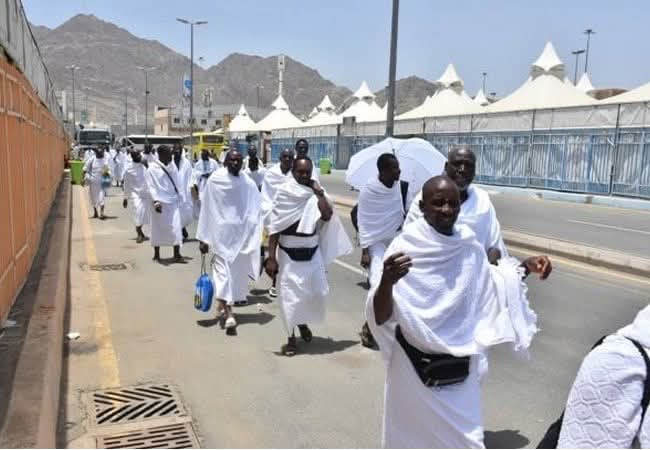
?Hajj is one of the world's largest annual religious gatherings, bringing together millions of Muslims from across the globe. Beyond its profound spiritual significance, the pilgrimage involves complex administrative, diplomatic, logistical, and humanitarian operations that require accurate and responsible reporting.
?From visa processing and airlift arrangements to accommodation, feeding, transportation, medical services, and the use of digital platforms such as Nusuk-Masar, covering Hajj operations demands far more than the ability to record videos, take photographs, or publish instant updates on social media.
?It is against this background that the Independent Hajj Reporters (IHR) recently called for official media accreditation for Hajj coverage to be restricted to trained and verifiable journalists.
In a position statement, the organisation argued that Hajj is too sensitive and complex to be left to inexperienced practitioners, warning that inaccurate reports, unverified videos, and sensational headlines could trigger unnecessary panic among pilgrims, erode public confidence, and strain diplomatic relations between Nigeria and Saudi Arabia.
?IHR specifically urged the National Hajj Commission of Nigeria (NAHCON), state pilgrims' welfare boards, and the Saudi Ministry of Hajj and Umrah to accredit only trained journalists for official press coverage.
It also proposed a separate accreditation category for bloggers, influencers, and content creators, arguing that their digital reach should not automatically qualify them for recognition as members of the press.
This position raises a critical question: should formal journalism training be a compulsory requirement for anyone seeking accreditation to cover Hajj?
?There is undoubtedly a compelling case for higher professional standards. Unlike routine public events, Hajj operations span several interconnected institutions and regulatory frameworks.
A basic misunderstanding of visa rules, travel schedules, accommodation contracts, or medical protocols can easily produce misleading narratives. For instance, a routine adjustment to an operational deadline might be wrongly framed as a cancellation of the entire pilgrimage; a temporary airlift delay could be reported as an indefinite suspension of flights; or an isolated medical incident could be shared without vital context.
Such reports spark widespread anxiety among intending pilgrims and their families, particularly when amplified on social media before relevant authorities can issue clarifications.
?A reporter familiar with the Hajj ecosystem is far better equipped to identify the appropriate institutions, ask informed questions, distinguish between confirmed facts and preliminary projections, and verify details prior to publication.
Rigorous verification is especially critical when reporting on deaths, medical emergencies, missing pilgrims, and visa bottlenecks.
?Beyond factual accuracy, strict ethical considerations set Hajj reporting apart. Pilgrims are engaged in a deeply personal act of worship and deserve dignity and privacy.
Coverage of sick pilgrims, accident victims, and the deceased must never be driven by the pursuit of online engagement. Capturing images of women in Ihram, vulnerable patients receiving medical care, or grieving families demands immense sensitivity.
Sound journalism ethics dictate that public interest must never serve as an excuse to invade personal privacy.
?At the same time, the push to restrict accreditation exclusively to traditional journalists warrants careful scrutiny.
The modern media landscape has evolved dramatically. Bloggers, documentary filmmakers, photojournalists, and independent digital storytellers now play an indispensable role in public communication.
Many content creators possess extensive experience covering major public events, alongside technical and visual storytelling skills that conventional newsrooms do not always prioritise.
Their work brings the Hajj experience closer to audiences who rely less on traditional broadcast and print media, while also helping to spotlight service gaps and amplify pilgrims' real-time concerns.
?Consequently, the line between credible reporting and reckless publishing cannot be drawn solely by the platform an individual uses. A creator publishing on YouTube or Instagram can uphold rigorous fact-checking and ethical restraint, just as holding a journalism degree or a traditional press card does not automatically guarantee accuracy or professionalism.
The defining criterion should be whether an applicant can demonstrate the competence, integrity, and accountability required to cover a sensitive international gathering.
?While IHR’s advocacy for elevated standards is commendable, a blanket exclusion of all bloggers and digital creators would be counterproductive. Rather than treating formal journalism training as the sole gateway to accreditation, authorities should adopt a tiered system structured around the nature of an applicant's media work and its attendant responsibilities. Traditional news reporters and editors could be accredited under a dedicated press category, while independent documentary producers, photographers, and digital creators are vetted under a separate media-content tier.
?Crucially, both categories must be bound by strict baseline standards governing fact-checking, informed consent, pilgrim privacy, responsible imagery, reliance on official sources, and compliance with host-country laws. The vetting process should thoroughly verify applicants' track records, the credibility of the outlets or platforms they represent, their editorial scope, and their baseline knowledge of Hajj administration.
?Authorities can further strengthen compliance through mandatory pre-Hajj orientation programmes covering the administrative structure of the pilgrimage, emergency communication protocols, media ethics, pilgrim protection, and official information channels. This must be backed by a transparent accountability framework to enforce corrections and sanction violations—whether committed by a legacy newsroom correspondent or an independent creator.
?Ultimately, the core mandate of Hajj media coverage is to inform the public, promote institutional accountability, and faithfully document the pilgrim experience. While the pilgrimage must be shielded from misinformation and sensationalism, accreditation rules must never become a pretext for insulating officials from legitimate scrutiny. Reporters and content creators alike must retain the freedom to investigate complaints regarding accommodation, catering, transportation, healthcare, and financial transparency. The exact same standards that discourage unverified rumours should empower journalists to probe credible allegations and demand answers from public officials.
?NAHCON, state pilgrims' boards, and Saudi authorities also bear a reciprocal duty to provide timely, accessible, and verifiable data. An official communication vacuum remains the primary breeding ground for speculation and panic.
?The conversation should not be reduced to a turf war between traditional journalists and digital creators, nor should it be about granting exclusive access to legacy media. It is about ensuring that every individual granted official access respects the immense responsibility that comes with covering an event involving millions of lives and the international standing of participating nations. Hajj is a sacred act of worship, yet its administration remains a vital matter of public interest. Safeguarding its integrity requires accurate reporting, ethical discipline, and institutional transparency—anchored in a system that rewards demonstrated competence over mere credentials.
.jpg)