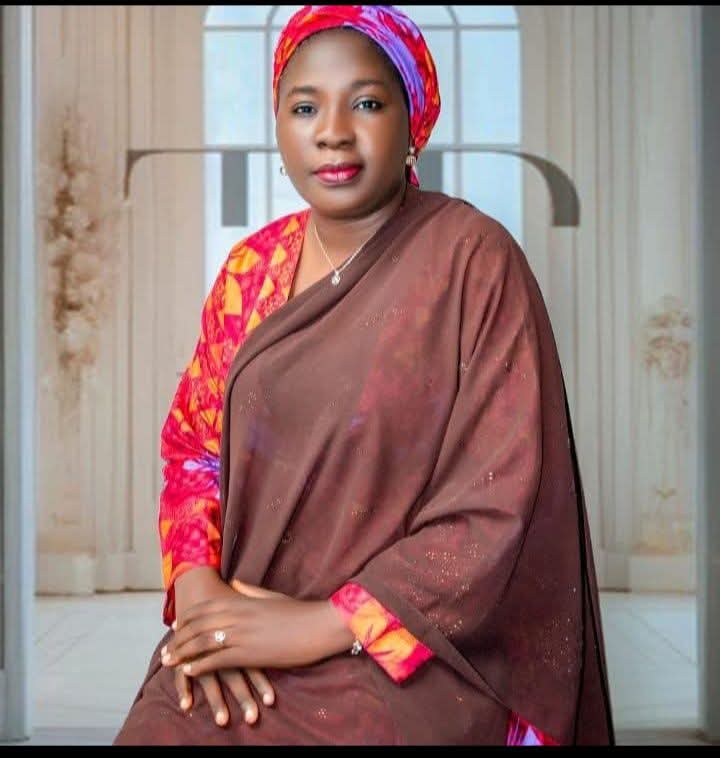
By Rasheeda Noro Yahaya
May 22, 2026
?The stark reality of the educational deficit in Northern Nigeria hit me vividly during a recent visit to a hospital’s Accident and Emergency (A&E) ward.
?I watched a teenage mother, visibly distressed, holding her severely ill child. She was completely unable to communicate with the nurses on duty because she spoke only Hausa, and they did not. Earlier, she had approached me to ask where to get a hospital card, and I directed her to the General Out-Patient Department (GOPD).
?Shortly after, she returned, still lost. A nurse ran after me, realizing I spoke Hausa, and pleaded, "Please, can you help us ask this patient what she needs?"
?I stepped in to translate, explaining that her child was critically ill. The nurse immediately directed us to the pediatric department. I guided her there, but the weight of that interaction stayed with me.
?If that young mother had received even a basic secondary school education, she would have possessed the confidence and vocabulary to state her emergency—even if she wasn't entirely fluent. In a hospital, a communication barrier isn’t just an inconvenience; it can be a matter of life and death.
The Cost of Short-Sightedness
?The fundamental mistake often made in parts of the North is viewing formal education solely through a lens of cultural skepticism, ignoring its practical necessity in daily life. We fail to consider the routine spaces—like hospitals, banks, and government offices—where one inevitably encounters people who do not share the same language or culture.
Education is the ultimate pillar of a woman’s empowerment. In today’s world, education is not just about textbooks; it shapes critical thinking, serves as a guide to navigating life, and builds vital self-confidence.
?Too often, individuals are treated condescendingly in public spaces simply because they lack the basic communication skills required to navigate them.
?Paradoxically, many Northern men strictly insist that male doctors should not attend to their wives during childbirth or illness. Yet, by treating the education of women as a taboo or a secondary priority, the region actively prevents the grooming of female doctors, nurses, and professionals. This hypocrisy only serves to underdevelop our own communities.
Dismantling the Myths of Deficiency
?While ignorance is a universal disadvantage, the most deeply deprived demographic in our society remains the girl child from the core North and rural areas. Regrettably, very little is being done to aggressively rewrite this narrative.
?The resistance often stems from a place of insecurity:
- The Fear of Empowerment: Some uneducated men view an enlightened woman as a threat, treating education as a forbidden path she must never walk.
- ?The Myth of Insubordination: Even among educated men, there is a pervasive anxiety that an educated woman will not be a "submissive" wife. Consequently, higher learning is framed as a marital deficiency for young women.
- ?The "Kitchen" Mentality: Parents hesitate to invest in their daughters' schooling based on the outdated cliché that a woman's education "ends in a man’s house."
A Call to Action: Bridging the Gap
?The sooner we enlighten our rural communities, the better our chances of survival. In a rapidly evolving world, the communication gap alone is a massive barrier to healthcare, financial inclusion, and social mobility.
?We must urgently change our approach:
- Advocate Locally: If you have relatives in villages and rural areas, use your voice to encourage them to pursue education, no matter how basic.
- Champion the Girl Child: Urge families to send their daughters to school alongside their sons.
- Recognize the Mother's Role: When a girl becomes a mother, she becomes the primary custodian of the family's health and early education. She is the one who navigates the hospitals, attends school meetings, and manages community spaces, effectively representing the household.
Educating a girl child is not a threat to cultural values; it is an investment in community survival. When we educate the Northern girl, we shape minds that will inevitably uplift their families, rescue their children in times of crisis, and build a stronger, self-sufficient region.
Rasheeda Noro Yahaya is the CEO of ROtv24 and a passionate advocate for women and children you can reach out on this email rasheedausman11@gmail.com
You May Also Like