The National Assembly Joint Committee on Livestock Development on Friday led a critical budget defence session, raising concerns over the zero release of funds to the Federal Ministry of Livestock Development in 2025 and demanding detailed clarification on implementation plans for the sector.
The joint hearing was chaired by Senator Shehu Buba and Hon. Wale Raji, Chairman of the House of Representatives Committee on Livestock Development, as lawmakers underscored their constitutional duty to ensure prudent allocation and utilisation of public resources.
Opening the session, Senator Buba described the engagement as a defining moment in Nigeria’s livestock reform agenda, recalling that President Bola Ahmed Tinubu established the ministry on July 9, 2024, under the Renewed Hope Agenda to reposition the livestock sector as a catalyst for food security, job creation, rural development and national stability.
He stressed that in line with Section 80(4) of the 1999 Constitution (as amended), the legislature must ensure that no public funds are withdrawn without due appropriation and oversight.
“This budget defence is not a routine exercise. We must interrogate allocations, examine implementation capacity and ensure value for money,” he said.
Buba noted that despite Nigeria’s vast livestock resources — including one of the largest cattle populations in Africa — productivity remains low due to outdated production systems, inadequate veterinary services, weak feed infrastructure and limited processing capacity.
According to him, these structural deficiencies have fueled recurring farmer-herder conflicts, rural insecurity and heavy reliance on imported dairy and livestock products.
Zero Release for 2025
Presenting the ministry’s position, the Minister of Livestock Development, Idi Mukhtar Maiha, disclosed that although the ministry received a ?75 billion take-off grant in 2024, only ?20 billion was released and fully utilised for institutional setup and execution of 40 projects.
He said the ministry had a ?11.8 billion allocation in 2024, comprising ?10 billion for capital expenditure and ?1.8 billion for overhead.
However, he confirmed that there has been no cash-backed release for the 2025 budget.
“For 2025, there has been zero performance because there has been zero release. We have been operating on the ?20 billion previously disbursed from the take-off grant,” Maiha said.
He explained that despite financial constraints, the ministry had developed a National Livestock Growth Acceleration Strategy aimed at mainstreaming Nigeria’s largely informal livestock sector — estimated at about $32 billion — into the formal economy.
Security, Economic Reform Focus
Maiha emphasised that livestock development has direct implications for national security, noting that pastoral migration driven by inadequate feed and water resources has been a recurring source of conflict.
He disclosed that the ministry had inventorised 417 grazing reserves and livestock service centres nationwide as part of efforts to transition towards structured, modern and climate-smart production systems.
Lawmakers at the hearing stressed the need for strategic investments in ranching development, feed and fodder production, water infrastructure, veterinary services, breeding programmes, processing facilities and digital livestock identification systems.
They also highlighted the importance of strong legal and regulatory frameworks and collaboration with state governments to ensure effective implementation.
You May Also Like
-
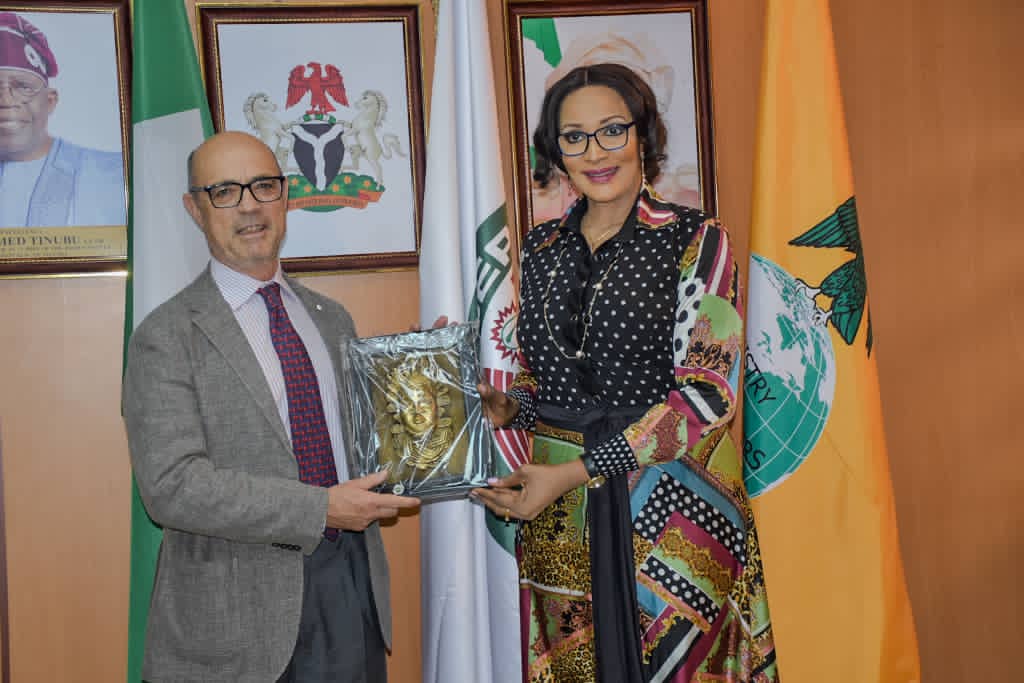
Foreign Affairs Minister Of State Receives the Ambassador of Spain to Advance Nigeria–Spain Bilateral Cooperation
-
NUJ FCT, NDPC Seal Data Shield Pact to Fortify Journalists Against Cyber Threats
-
Senate Reviews Environment Ministry’s ?65.96bn 2026 Budget Proposal
-
Zamfara NAWOJ Demands Passage of Special Seats Bill (HB1349), Women’s Political Participation